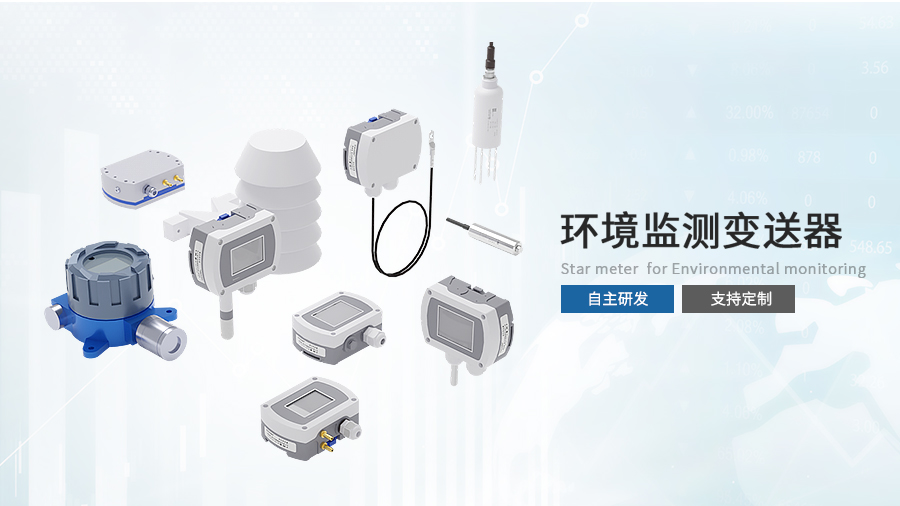
Definition of sensor: The English name transducer/sensor refers to a detection device that can feel the measured information and transform the felt information into an electrical signal or other required form of information output according to a certain law to meet the requirements of information transmission, processing, storage, display, recording and control.
?
Sensor characteristics: with the characteristics of miniaturization, digitization, intelligence, multi-functionalization, systematization, networking, etc., it is the primary link to achieve automatic detection and automatic control.
?
Classification of sensors:
?
1. According to the purpose of the sensor:
It can be divided into pressure-sensitive and force-sensitive sensors, position sensors, liquid level sensors, energy consumption sensors, speed sensors, acceleration sensors, radiation sensors, and thermal sensors.
?
2. According to the principle of the sensor
It can be divided into vibration sensors, moisture sensors, magnetic sensors, gas sensors, vacuum sensors, biological sensors, etc.
?
3. Output the signal according to the sensor
3.1. Analog sensor: convert the measured non-electrical quantity into an analog electrical signal.
3.2. Digital sensor: convert the measured non-electrical quantity into a digital output signal (including direct and indirect conversion).
3.3. Digital sensor: the output (including direct or indirect conversion) that converts the measured signal into a frequency signal or a short-period signal.
3.4. Switch sensor: When a measured signal reaches a certain threshold, the sensor outputs a set low or high level signal accordingly.
?
4. According to the manufacture of sensors
4.1. The process integration sensor is manufactured with the standard process technology for the production of silicon-based semiconductor integrated circuits. Often, part of the circuitry used for the initial processing of the signal under test is also integrated on the same chip.
4.2. The thin-film sensor is formed by depositing a thin film of the corresponding sensitive material on the dielectric substrate (substrate). In the case of a hybrid process, part of the circuit can also be fabricated on this substrate.
4.3. The thick film sensor is made by using the slurry of the corresponding material and coating it on a ceramic substrate, which is usually made of Al2O3, and then heat treated to form the thick film.
4.4. Ceramic sensors are produced using standard ceramic processes or some variant of them (sol, gel, etc.). After the appropriate preparatory operation, the formed components are sintered at high temperatures. There are many common characteristics between the two processes, thick film and ceramic sensors, and in some ways, the thick film process can be considered a variant of the ceramic process.
Each process technology has its own advantages and disadvantages. Due to the low capital investment required for research, development and production, as well as the high stability of the sensor parameters, ceramic and thick-film sensors make sense.
?
5. According to the measurement purpose of the sensor
5.1. Physical sensors are made by using the characteristics of obvious changes in some physical properties of the measured substance.
5.2. Chemical sensors are made of sensitive components that can convert chemical quantities such as composition and concentration of chemical substances into electrical quantities.
5.3. Biosensors are sensors made of the characteristics of various organisms or biological substances to detect and identify the chemical components in living organisms.
?
6. According to the composition of the sensor
6.1. Basic sensor: It is the most basic single conversion device.
6.2. Combined sensor: It is a sensor composed of different single conversion devices.
6.3. Application-oriented sensor: It is a sensor composed of a basic sensor or a combined sensor combined with other mechanisms.
?
7. According to the form of action of the sensor
According to the form of action, it can be divided into active and passive sensors.
7.1. The active sensor has a function type and a reaction type, which can send a certain detection signal to the measured object, and can detect the changes generated by the detection signal in the measured object, or form a signal by the detection signal producing a certain effect in the measured object. The mode of detecting the change of the signal is called the action type, and the mode of detecting the response and forming the signal is called the reaction type. Radar and radio frequency range detectors are action-type examples, while photoacoustic effect analysis devices and laser analyzers are reaction-type examples.
7.2. The passive sensor only receives the signal generated by the measured object itself, such as infrared radiation thermometer, infrared camera device, etc.
?
If you have any questions about product consultation, product customization, agency, technical inquiry, quotation, etc., please contact Xingyi: 400-600-4496!
?